Mkhitar Gosh and the number six
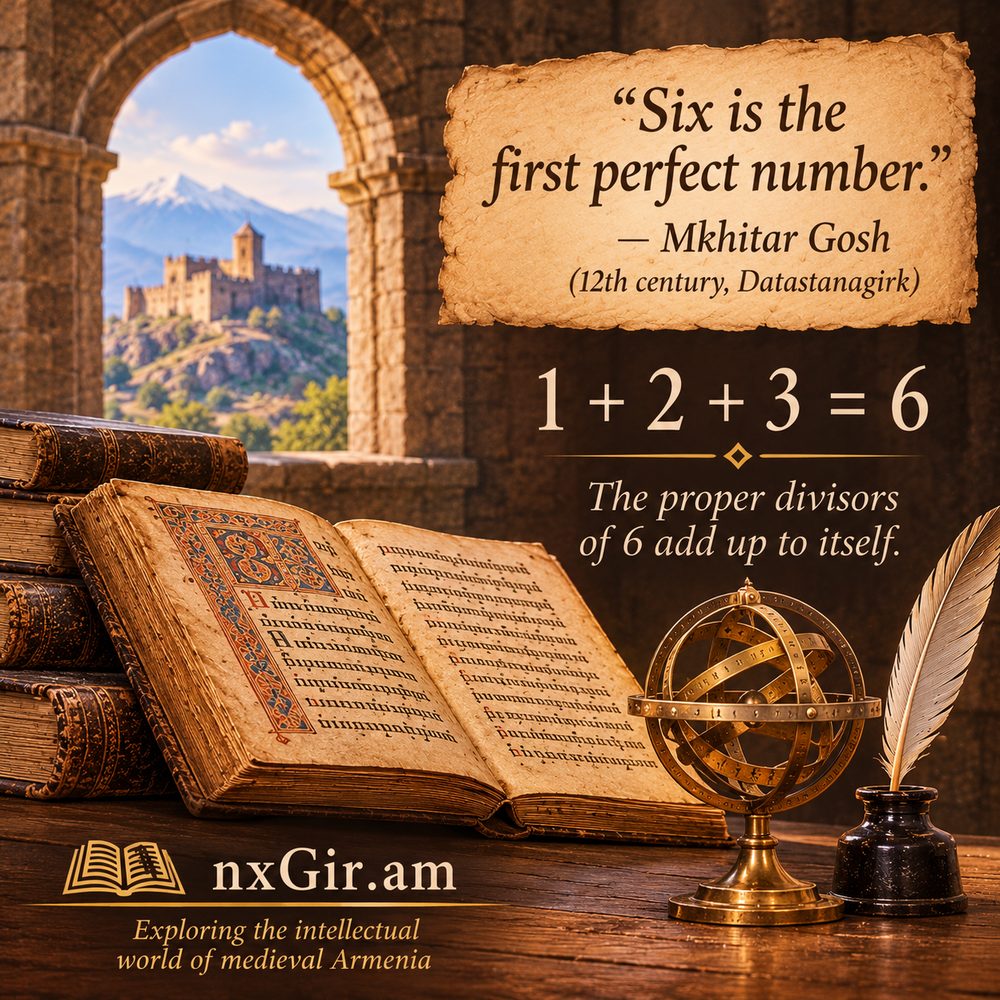
About the picture: the words in it are a modern paraphrase, not a quotation. Gosh writes «երկոտասան բաղկանայ յերկուց վեցից, եւ վեցն կատարեալ թիւ է»: "twelve is made of two sixes, and six is a perfect number", and then lists his reasons. The picture should be replaced with one that quotes this line.
Mkhitar Gosh lived in the 12th century, and he is the author of the largest book in our library so far: the Datastanagirk, "The Book of Judgments", the law code of medieval Armenia. This week we finished its modern Armenian translation of the first two redactions, and the third is next. So it is a good time to meet the man.
Who he was
Gosh was born around 1130 in Gandzak and died around 1213. He was a vardapet, a teacher and scholar of the Church, and founded the monastery of Nor Getik in the north of Armenia, today called Goshavank after him. Besides the law code he wrote a collection of fables, and sermons.
He wrote the Datastanagirk about 1184, when Armenians lived without a king and with no common law. Church and village needed a written book to settle disputes, so he gathered the laws from the Bible, the canons of the Church and the customs of other peoples, and set down how they should be kept in his own day.
Why six
The picture above says "Six is the first perfect number", and that is how a modern reader would put it: the parts of 6 that divide it, 1, 2 and 3, add up to 6. Gosh does not say it like this. But he does call six a perfect number (կատարեալ թիւ), in the preface, where he gives six reasons for it.
His starting point is the structure of the book. It has twelve chapters, and twelve is made of two sixes. Then come the reasons, and some belong to his time. Six is made of three, an odd number, and two, an even one, and every number is odd or even. It is the number of the days of creation. It is the measure of the movement of a body. The last reason is that twelve is born from it, and twelve is the number of the apostles, the judges of the world, who in turn gave the Church other judges. For him a law book built on a perfect number was a work in order, not a heap of rules.
We cannot say that he knew the sum 1 + 2 + 3. We can say that a lawyer in 1184 opened his law code with arithmetic, and that is a small picture of how wide the learning of medieval Armenia was.
Read it yourself
The Grabar text of all three redactions is in the library, with the modern Armenian translation of the first two beside it. The translation is a machine draft that awaits review, so compare it with the original, and tell us where it is wrong. The passage about six is in the preface, in the first part of the first redaction (and again in the third).