Vasak and the Seven Wolves
Comics are a new part of nxGir: scenes from the books of the Library, one series at a time. The first one comes from the Taregirk of Smbat Sparapet, and the picture words are a retelling in modern Armenian, not a quotation. Each page has its place in the original under it.
The comic
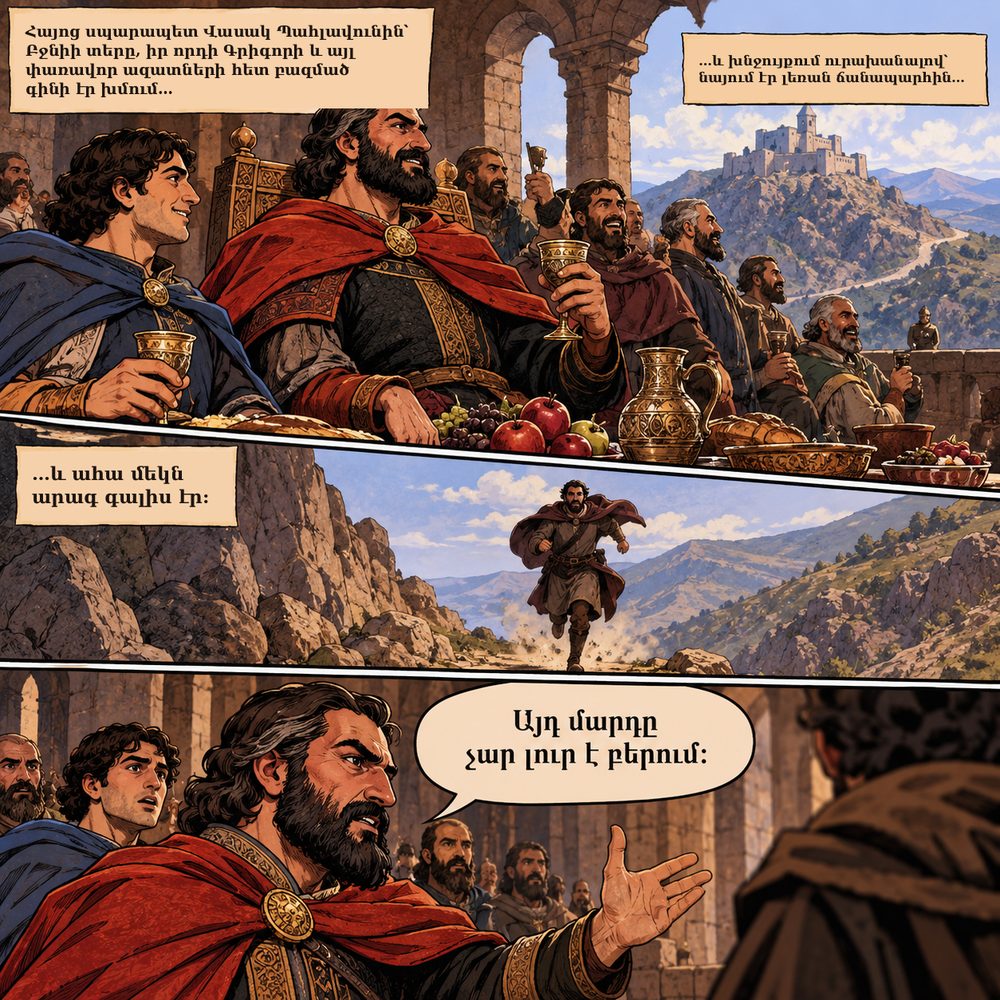
Page 1. «Վասակ Պահլաւունի՝ սպարապետն Հայոց, տէր Բջնոյ ... եւ հայէր ընդ ճանապարհ լերինն. եւ ահա գայր ոմն թէզ»։ "Vasak Pahlavuni, sparapet of the Armenians, lord of Bjni ... was looking down the mountain road, and behold, a man came running."
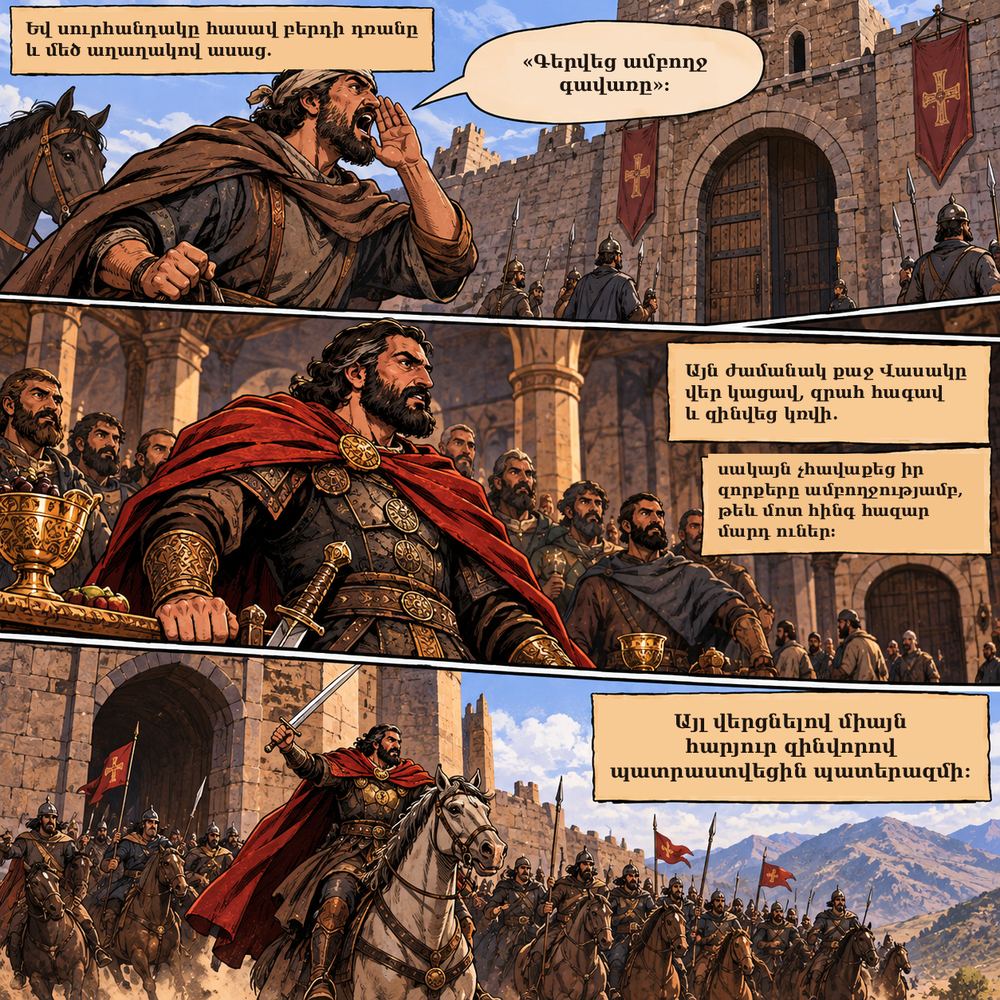
Page 2. «Գերեցաւ ամենայն գաւառս»։ "The whole district is taken captive." Vasak had five thousand men, but did not wait to gather them.
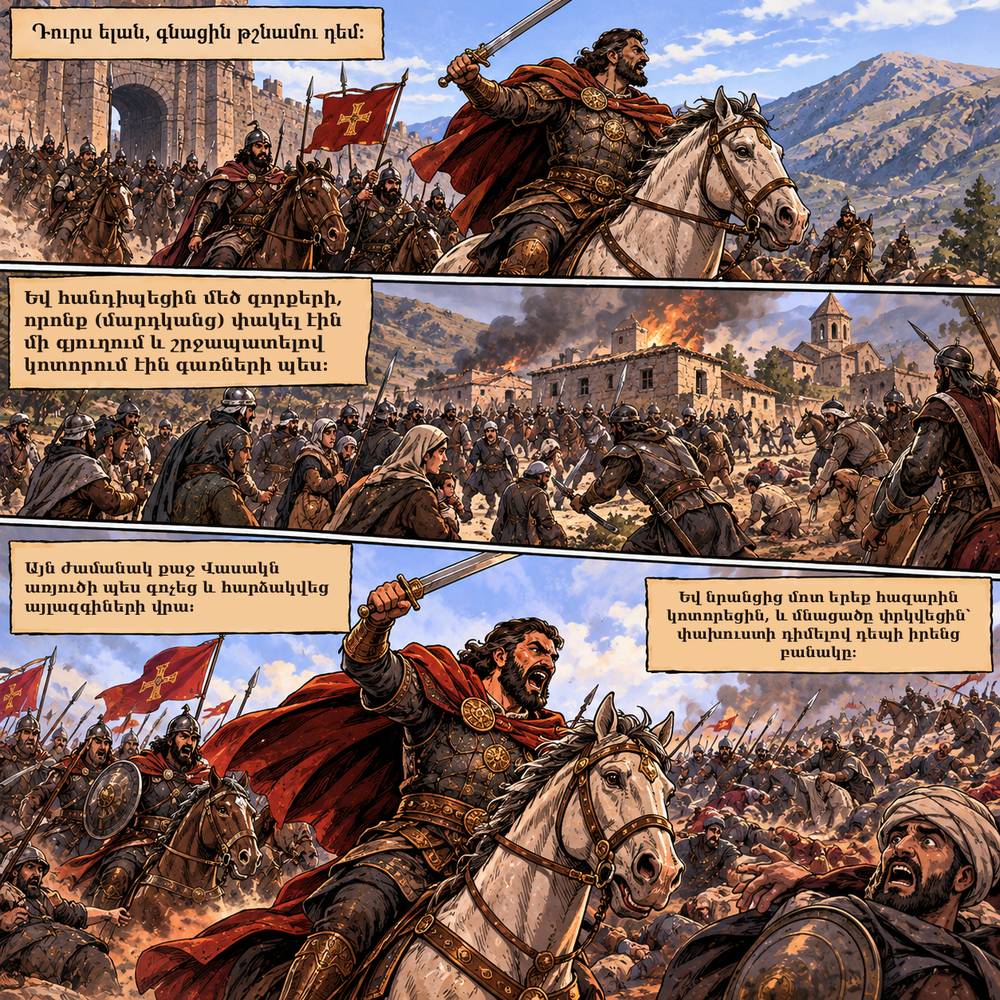
Page 3. «Յայնժամ քաջն Վասակ գոչեաց զէտ առիւծ»։ "Then brave Vasak roared like a lion." About three thousand of the raiders fell.
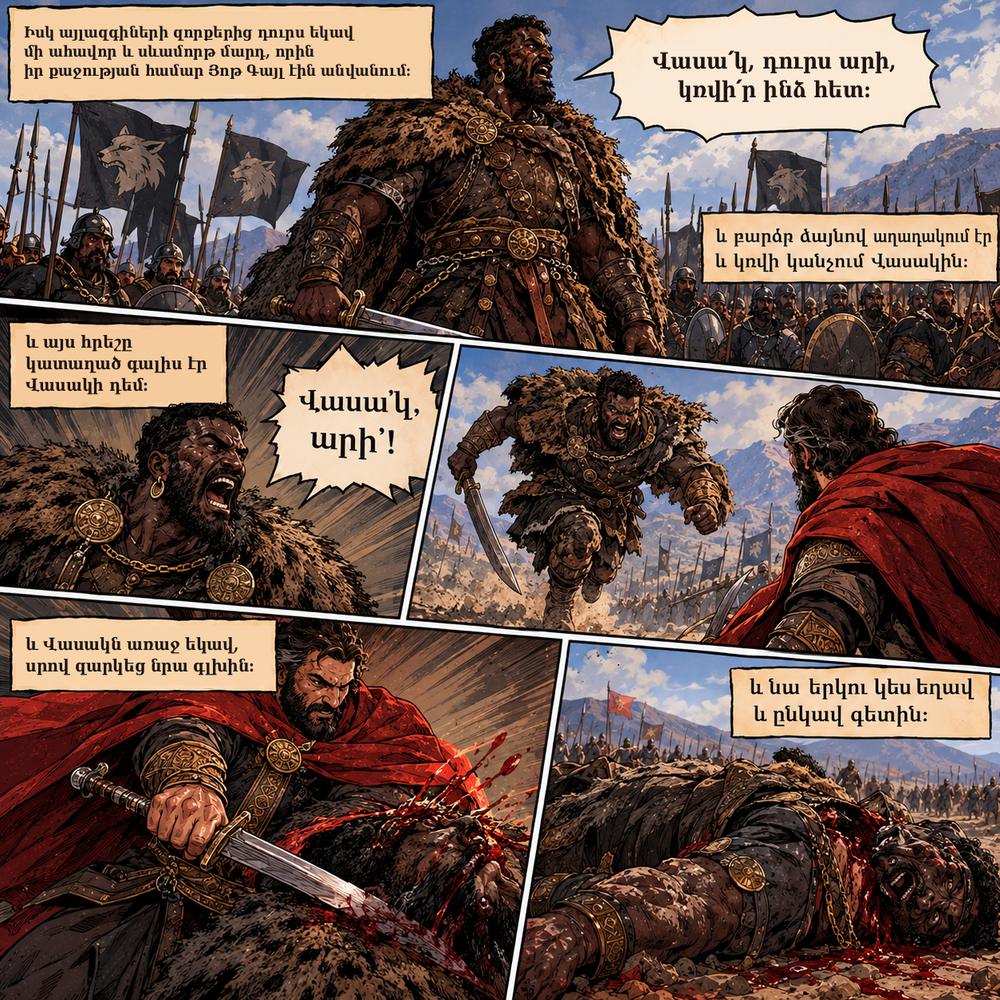
Page 4. «Եօթն գայլ անուանէին»։ "They called him Seven Wolves", for his courage.
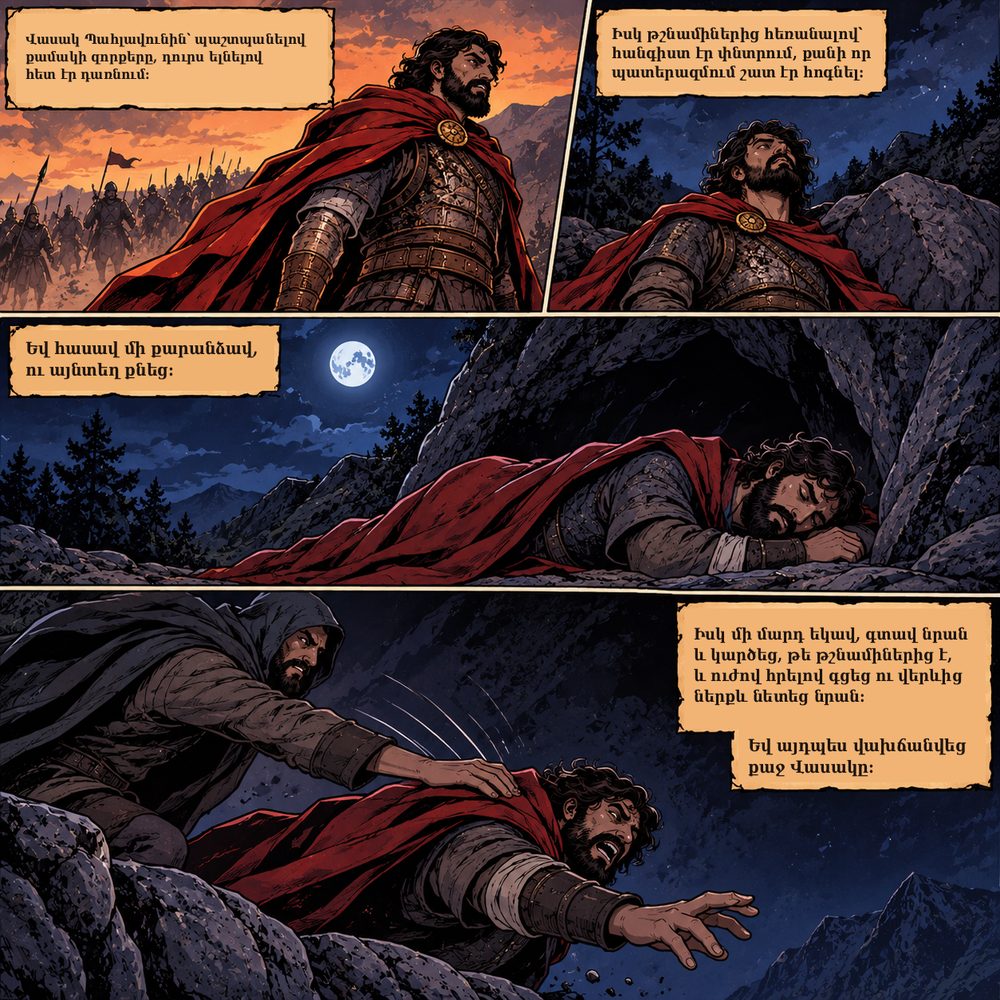
Page 5. The last lines of the scene: Vasak lies down to rest in a cave, and a man who does not know him throws him from above.
What the chronicle says
Vasak Pahlavuni was the sparapet, the commander of the army of Armenia, and the lord of the fortress of Bjni. The Taregirk places this story shortly before the year 421 of the Armenian era, AD 972. A foreign army had come into the district. News of it reached Vasak at his own table, and he rode out with a hundred men to meet it.
The story is told as a chain of short pictures: the feast, the runner, the ride, the village, the duel. The champion of the other side is called Seven Wolves, a nickname he earned by his courage. Vasak killed him, but in the fight the Armenian lines lost one another in the crowd, and the brave Mihran fell.
Vasak turned back, tired, and lay down in a cave. The man who found him took him for an enemy, and so the sparapet of Armenia died, not at the hands of the army, but by a mistake.
What the comic changes
It follows the text closely and leaves out a few lines: the names of the other commanders, and what Vasak did before he armed himself. The pictures are an artist's idea of the scene, so the clothes and the weapons are not those of the 10th century. If you notice a detail that is wrong or missing, tell us.
Read it yourself
The story is in the first part of the Taregirk, in the Library under Smbat Sparapet. The Grabar text and its modern Armenian translation stand side by side: open the part and press ⇆.